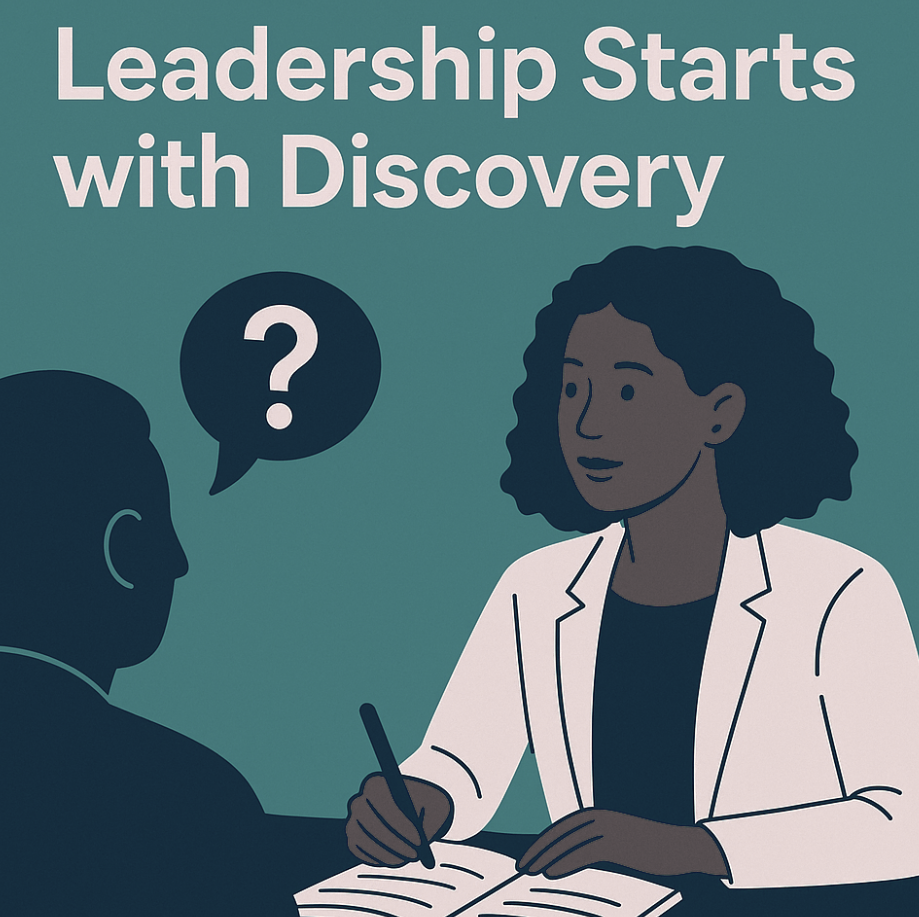
Throughout my career, I was often a voice in the room, guiding strategy, shaping narratives and ensuring alignment. In recent years, through my own growth and self-reflection, I’ve shifted my purpose from being the voice to enabling others to find theirs.
Today, as a leadership coach and communications executive, I’ve shifted from telling to listening, from directing to asking. Because great leadership isn’t just about leading; it’s about lifting people in a way that lets them lead confidently, authentically and in alignment with their strengths. Understanding yourself helps you to know and appreciate others.
Leadership Starts with Discovery
Lifting people into roles and to deliver outcomes isn’t about titles or org charts. It’s discovering how someone is wired, what motivates them, where they naturally thrive and what might be holding them back. Strength and skill assessments, a common place to start, have been a consistent part of my career; in fact, I’ve had the opportunity to take assessments through leadership training more times than I can count. For example, as humans, we often tell ourselves what we have come to believe are our truths based on something we might have heard or been told along the way. Holding that in our minds is often what adds to barriers for growth by creating assumptions about what we’re capable of achieving. Other times, we just don’t want to see the perceptions we create or actions we take that might be holding us back. An assessment is such a nonthreatening way to begin self-discovery and to reframe an internal narrative; that’s why I love these tools.
When a team participates in this process together, these tools can be really powerful to help individuals see themselves in the context of a group dynamic where each member brings value as they work toward common goals; it sheds light on the mosaic that can deliver outcomes and they help leaders see the mosaic of potential in their teams. The team usually starts to shift in the room as they build their unique ways of working to operate with intention.
From Labels to Leverage
In terms of a watch out, I’m really conscious to bring a leader or team through an assessment with the understanding that there is no right and there is no wrong, and that all of us naturally exhibit aspects of all the different qualities and behaviors these tools identify. It’s really key to avoid labeling people overleveraging insights.
It’s not about pigeonholing people, it’s about aligning energy around the possibilities. When people lead from their strengths, they don’t just perform, they thrive.
Creating Space for Coaching
So, you’ve taken an assessment and reviewed the results. Now what? That’s where a coaching partnership uncovers opportunity.
Coaching creates a safe space to reflect, grow and navigate complexity. It’s where we ask the deeper questions: What keeps showing up that you hope will go away? What is your current approach costing you? What would you attempt if you thought no one was keeping score?
This relationship is built on trust and candor to get to discovery. As a coach, I don’t give people answers; I hold up a mirror for reflection, and lean into curiosity and possibility. Leveraging the awareness an assessment offers with the context created by coaching has led to leadership transformation, clarity of purpose and even the confidence to take a path that was considered unthinkable, irrational or not possible.
An A-ha Moment
I was working with a senior leader who was struggling with a team member. Week after week, our sessions centered on this difficult relationship and mounting frustrations.
Finally, I asked my client to tell me just one thing they’ve seen the employee do well. After a long pause and pushback, he found something genuine. I then asked him, “have you ever told them that?” The response was no. The next question was, “what would happen if you did?”
That simple shift—from focusing solely on problems to acknowledging strengths—began transforming their working relationship. Sometimes the right question helps us see what’s been there all along.
This scenario encapsulates my passion for coaching, particularly with people leaders. Business growth and personal growth both hinge on how people connect and communicate. When we help leaders develop these skills, everyone benefits—the individuals, teams, and organizations.
Final Thought: From Voice to Vision
My purpose today is no longer to be the voice that leads the room but to be the guide that helps others uncover theirs. Because the leaders we desperately need aren’t the ones with all the answers—they’re the ones brave enough to ask better questions, vulnerable enough to be real, and wise enough to know that their job is to unlock what’s already inside their people. It’s a journey I’m still on myself, learning to lead from authenticity rather than authority. That’s not just leadership. That’s alchemy.